
🐾 Pet Insurance 101: Deductible, Reimbursement & Annual Limit Explained
Descrição do post.
10/24/20253 min read


''Black woman smiling while holding her dog, browsing pet insurance options online.''
Understanding the Three Numbers That Shape Your Pet Insurance
Pet insurance might seem complicated, but once you understand three simple numbers — deductible, reimbursement rate, and annual limit — everything becomes clearer. These terms decide how much you pay, how much you get back, and how protected your pet really is.
Veterinary costs continue to rise in both the U.S. and Canada, making insurance a smart way to protect your budget and your furry friend. In this guide, you’ll learn how each factor works and how to adjust them to fit your lifestyle and your pet’s needs.
What Is a Deductible?
A deductible is the amount you agree to pay out of pocket before your insurance coverage starts reimbursing you. Think of it like the first slice of any bill you handle yourself.
A lower deductible (for example, $250) usually means you’ll pay more each month in premiums, but you’ll have to cover less when something happens. A higher deductible (like $1,000) means lower monthly costs — but more money upfront when your pet needs care.
Choosing the right deductible depends on your budget and how often you expect to visit the vet. If your pet is young and healthy, a higher deductible can make sense; if you prefer peace of mind, a lower one might be worth the extra monthly cost.
What Does “Reimbursement Rate” Mean?
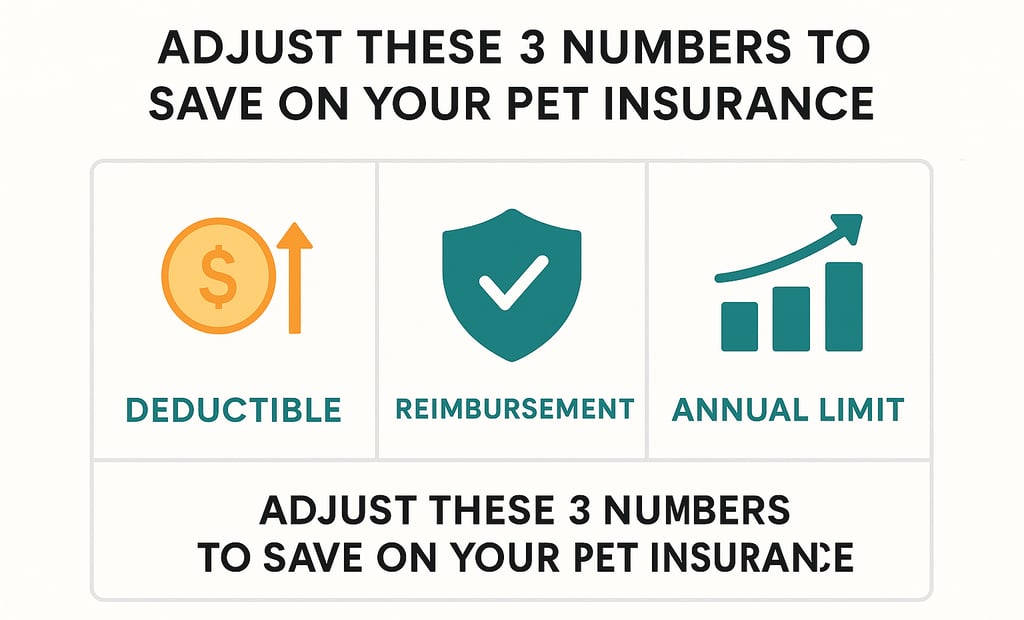
Infographic showing three icons — a coin for deductible, a shield for reimbursement, and a chart for annual limit, labeled “Adjust these 3 numbers to save.
Your reimbursement rate is the percentage your insurance pays after the deductible. Common options include 70%, 80%, or 90%.
If your reimbursement rate is 80%, that means your insurer pays 80% of the covered costs, and you handle the remaining 20%. This number affects your premium too — higher reimbursement rates cost a little more each month, but reduce surprises when emergencies happen.
When choosing, think about your comfort level with unexpected bills. A slightly higher premium might be worth it if you’d rather not face large out-of-pocket expenses.
What Is an Annual Limit?
The annual limit is the maximum amount your insurance will reimburse in one policy year. Some plans offer $5,000 or $10,000 limits, while others can be unlimited.
If your limit is $5,000 and your pet has a serious illness costing $7,000, you would pay the difference once the limit is reached. Pets with chronic or hereditary conditions may benefit from a higher limit or unlimited coverage to avoid gaps later.
Think of the annual limit as your safety net — the higher it is, the more freedom you have to make medical decisions based on your pet’s health, not your wallet.
How to Balance All Three
These three factors — deductible, reimbursement, and limit — work together. The goal is to find a balance that fits both your pet’s health and your monthly budget.
Lower deductible + high reimbursement = less risk, higher premium.
Higher deductible + modest reimbursement = more affordable monthly payments, more personal responsibility.
A generous annual limit ensures peace of mind in worst-case scenarios.
The best plan is the one that feels comfortable and predictable for you.
Hidden Details Worth Checking
Before you finalize a policy, review the fine print — because small details can make a big difference:
Look for waiting periods between signup and full coverage.
Understand how the insurer defines pre-existing conditions (some may cover “curable” ones after a symptom-free period).
Check if the reimbursement is based on actual vet bills or a fixed benefit schedule.
Review how premiums might change as your pet ages.
Reading carefully once can save you a lot of confusion — and money — later.
💗 Bonus Tip: Want to keep your pet healthier and happier every day? Discover 30 natural recipes that boost your pet’s energy and longevity.
💗 Compare top pet insurance plans for 2025 →
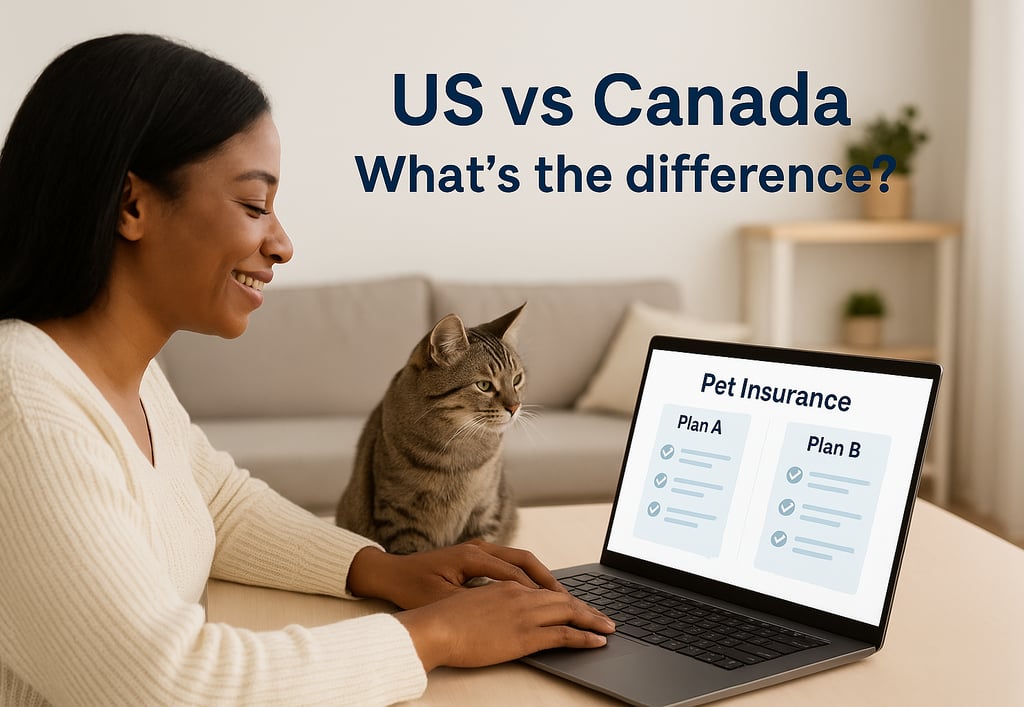
''Black woman at home reviewing pet insurance options on a laptop beside her cat, smiling with relief after finding the right coverage.''
Final Thoughts
Pet insurance is more than a contract — it’s a tool to protect your pet and your peace of mind. By adjusting these three numbers, you control how much you spend and how much you get back.
The secret isn’t choosing the “perfect” plan, but finding the right balance between cost and coverage that gives you confidence every time you visit the vet.
💬 Editor’s Pick: Worried about your pet’s safety outdoors?
See our favorite Smart GPS Collar for Dogs & Cats — track your pet anywhere, anytime, right from your phone.
CONTACT
Get in touch with us anytime for questions, collaborations, or suggestions.
Email: claudiofranco643@gmail.com
Follow
Connect / Newsletter
Subscribe to our newsletter
Stay connected for the latest updates.
© 2025. All rights reserved.